
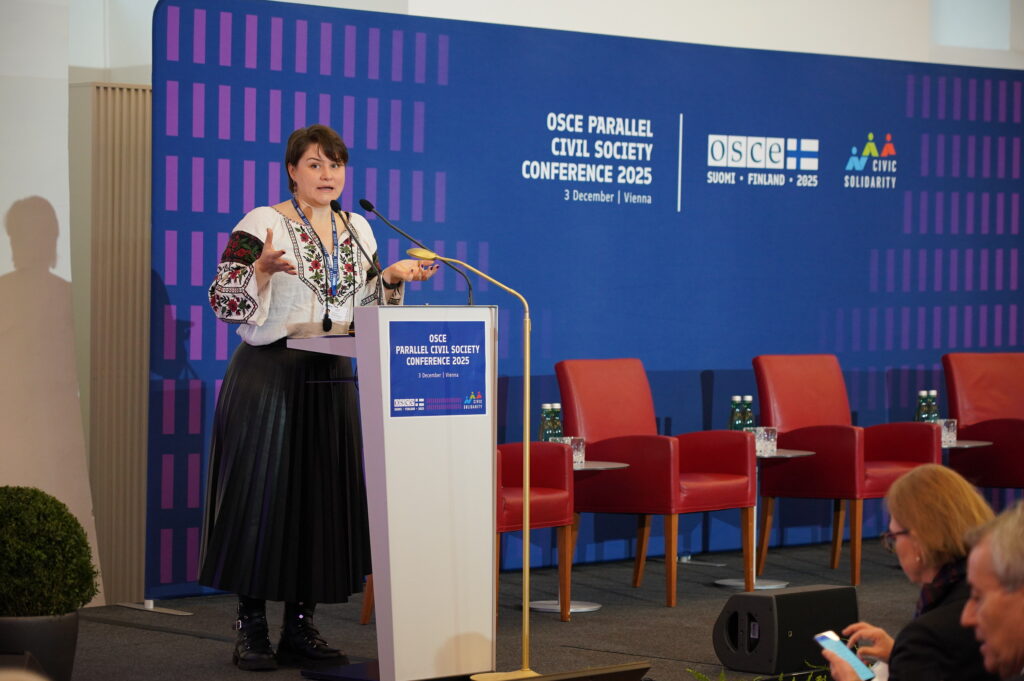
The OSCE Parallel Civil Society Conference, traditionally held on the eve of the Ministerial Council, took place this year on 3 December 2025 in Vienna, in the historic “Aurum” Hall of the Austrian National Library within the Hofburg Palace complex. The event was organised by the Civic Solidarity Platform (CSP), the largest coalition of independent civil society organisations in the OSCE region, uniting more than 90 CSOs from over 30 countries. More than 200 participants joined the conference in person, including human rights defenders, journalists, experts, diplomats, and senior representatives of key OSCE institutions.
The event was held with the support of Finland’s 2025 OSCE Chairpersonship and served as the culmination of the Helsinki+50 initiative — a process reflecting on the 50th anniversary of the 1975 Helsinki Final Act. The central theme of the year was the formula “civil society as the backbone of democratic resilience.” This message resonated particularly strongly against the backdrop of sobering statistics: according to the CIVICUS Monitor 2024, only 35% of OSCE participating States have an “open” civic space, while 11% are already classified as “closed,” and many others are rapidly restricting civic freedoms through “foreign agents” laws, persecution of activists, and declining funding.
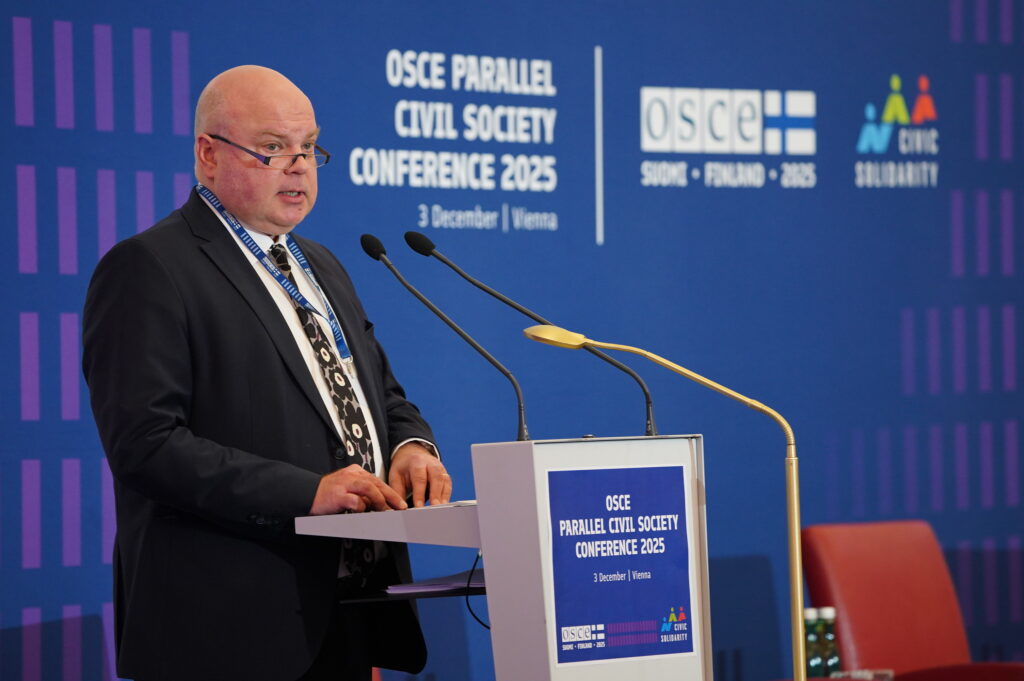
The conference programme was rich and well-structured. Following the opening session, which included welcome remarks by Oleksandra Romantsova, Executive Director of the Centre for Civil Liberties, Vesa Häkkinen, Finnish Ambassador, and representatives of Austria, participants were presented with the key document, “The Future Map: Helsinki Recommendations on Meaningful Engagement with Civil Society in the OSCE”. Developed through extensive consultations with dozens of organizations and experts, this document contains more than 20 concrete, practical proposals — ranging from an OSCE-wide civil society strategy and a rapid-response mechanism against reprisals to emergency grants for at-risk human rights defenders, regular consultative groups at all OSCE institutions, and mandatory inclusion of youth, women, LGBTQ+, Indigenous peoples, and persons with disabilities.
The day continued with thematic panels addressing meaningful civil society engagement in the Helsinki process, women’s voices across all three OSCE security dimensions, urgent human rights situations in specific countries (held in parallel interactive groups), and Finland’s implementation of its OSCE media-related commitments. The evening brought the culmination of the event — a concluding session featuring the top leadership of the OSCE and an unprecedented dialogue between two foreign ministers: Elina Valtonen (Finland’s Foreign Minister and OSCE Chairperson-in-Office 2025) and Ignazio Cassis (Swiss Foreign Minister and OSCE Chairperson-in-Office 2026).
Elina Valtonen stated clearly in her address: “A free and independent civil society is the foundation of resilient democracy. When freedoms are suppressed at home, aggression abroad often follows shortly after.” Ignazio Cassis affirmed that Switzerland would place citizens and civil society at the very center of its security policy in 2026.
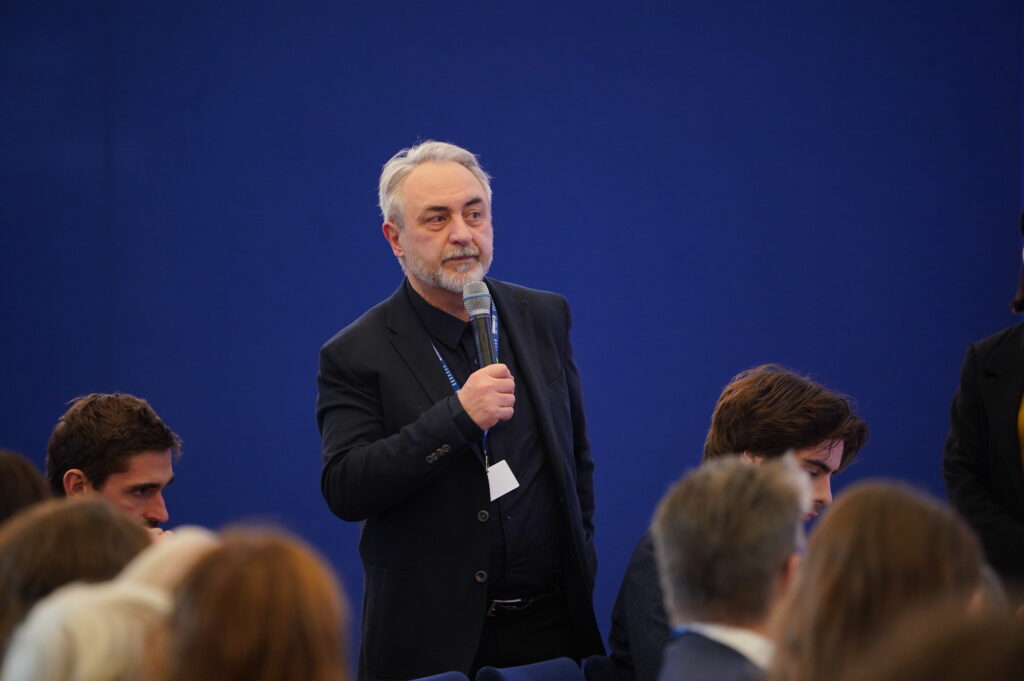
In their speeches, representatives of the Civic Solidarity Platform, Oleksandra Romantsova and Yuri Dzhibladze, emphasised that one of the central challenges for the OSCE remains the need to stop the war in Ukraine, restore respect for international law and ensure accountability for serious violations. They also called on participating States and the civil sector to develop a joint strategy for action aimed at protecting peace, supporting sustainable security and strengthening the role of civil society in the region.
The Helsinki Recommendations on Meaningful Engagement with Civil Society in the OSCE in short, Map for Future) were launched today by Anu Juvonen, Chairperson-in-Office’s Special Representative on Civil Society, at the OSCE Parallel Civil Society Conference 2025 in Vienna.
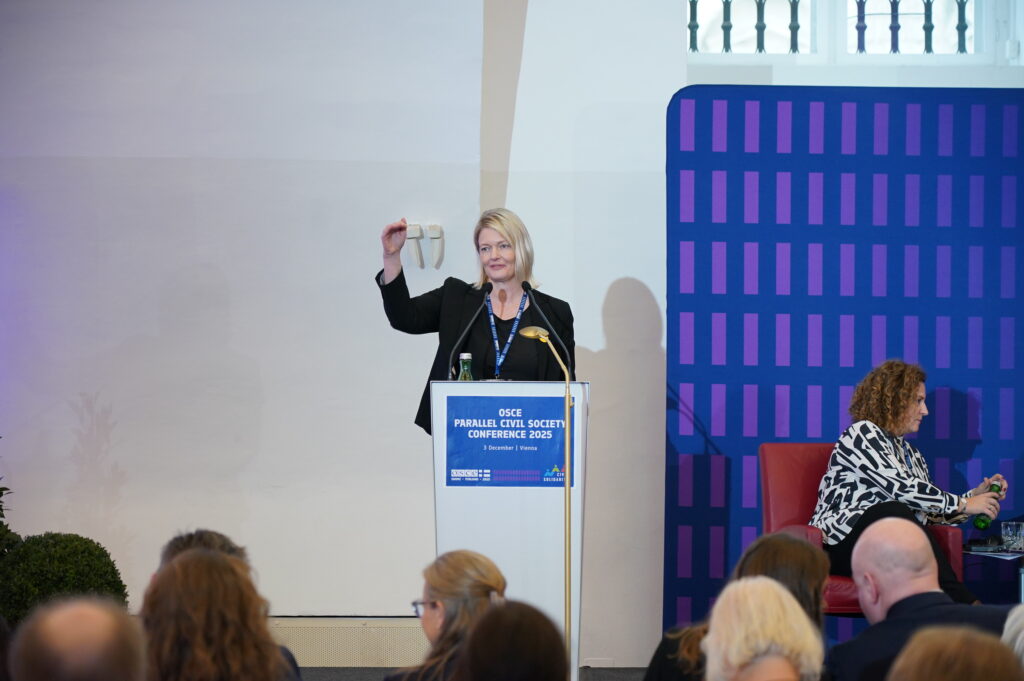
The purpose of the recommendations is to inspire the OSCE, participating States, and civil society actors to join forces, set high standards, and become more ambitious in their cooperation with civil society actors.
During this session, a symbolic handover ceremony took place: the 2025 Vienna Declaration, titled “Revitalizing the Helsinki Principles, Strengthening Comprehensive Security, and Ensuring Meaningful Civil Society Participation,” along with the previously presented Map for Future, were formally delivered to the ministers by representatives of the Civic Solidarity Platform.
The documents were immediately forwarded for consideration at the 32nd OSCE Ministerial Council, held on 4–5 December 2025, and have already been identified as one of the priorities of Switzerland’s 2026 Chairpersonship.
Thus, the 3 December 2025 conference became one of the most impactful in the 15-year history of OSCE parallel civil society events. It not only highlighted existing challenges but also provided a clear roadmap for institutional change, ensuring the direct transfer of recommendations to the highest political level — to both the current (Finland) and incoming (Switzerland) OSCE Chairs.
In an era of systemic democratic backsliding, hybrid threats, and shrinking civic space, the conference once again underscored that without a strong, free, and inclusive civil society, neither resilient democracy nor long-term security across the OSCE region is possible.